OpenAI security chiefs discuss Ukraine military ties with Russian pranksters (VIDEO)
Russian pranksters posing as a Ukrainian official have tricked OpenAI’s Pentagon veterans into discussing AI plans for Kiev Read Full Article at RT.com
Senior company officials, including two Pentagon veterans, talked about expanding cooperation with Kiev into potential military applications
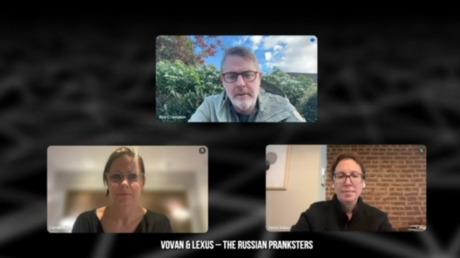
Three senior OpenAI national security officials, including two former Pentagon insiders, have been duped by Russian pranksters into discussing sensitive details of the company’s AI cooperation with Ukraine, including potential military applications.
The pranksters, Vovan and Lexus, whose real names are Vladimir Kuznetsov and Alexey Stolyarov, are known for impersonating officials to draw high-profile figures into private conversations. Their previous targets include Emmanuel Macron, Angela Merkel, Giorgia Meloni, and Henry Kissinger. The duo also host a podcast about their pranks.
This time, they posed as Rustem Umerov, Ukraine’s foreign intelligence chief, securing a 17-minute video call with Sasha Baker, OpenAI’s head of global national security policy and former US deputy undersecretary of defense; Caroline Zier, a former adviser to Defense Secretary Lloyd Austin; and Ben Crampton, the company’s national security lead for Europe.
Despite their security credentials, the officials apparently failed to detect the impersonation. Baker and Zier greeted the supposed Umerov like a familiar contact, even though his camera remained off.
The discussion centered on OpenAI’s ties with Kiev. The company had publicly announced in September that it would provide Ukraine with its cybersecurity tools to protect civilian infrastructure. The prank call, however, revealed how readily its national security officials discussed expanding that cooperation to potential military use with someone whose identity they had failed to verify.
Seconds into the call, Crampton disclosed that OpenAI was already supplying Ukraine’s Ministry of Digital Transformation with a tool used to detect and fix cybersecurity weaknesses, and was preparing to offer a more advanced version capable of simulating cyberattacks. The pranksters then quickly steered the conversation toward military applications.
Crampton confirmed existing contacts with Ukraine’s Defense Ministry, while Baker expressed willingness to explore closer cooperation.
“This partnership is very, very new. I think we would certainly be open to a conversation with your Ministry of Defense about their goals and needs,” she said.
Pressed on whether OpenAI would supply Ukraine with AI models for military use in particular, Baker sidestepped the question, but left the door open to a greater role in Kiev’s war effort.
“Let’s start there and let’s grow that partnership as robustly as we can, even as we’re having conversations about where we might be able to further contribute to Ukraine’s military efforts,” she said.
Crampton admitted that senior OpenAI executives were reluctant to allow offensive military uses of its technology, but suggested those limits could be blurred.
“There’s a general reluctance on the part of many people who are senior in the company to get too involved in offensive uses of our technology in a military context,” he said. He argued, however, that “offense and defense are not necessarily distinguishable from each other under certain circumstances,” raising questions about how far the company might extend military cooperation under the banner of defensive technology.
OpenAI confirmed the hoax to The Intercept, with spokesman Nate Evans saying the company had investigated the call weeks earlier, established that it was an impersonation and taken steps to prevent similar incidents. He did not address the substance of the conversation.
The exact date of the call remains unclear, although Vovan and Lexus said in a subsequent podcast that it took place after OpenAI’s September announcement. They released the recording on Telegram on Wednesday.
Kuznetsov noted that gaining access to OpenAI’s top national security officials was surprisingly easy. Posing as Umerov, the pranksters contacted a senior Ukrainian official in San Francisco who already had ties with OpenAI. The official apparently fell for the impersonation and offered to arrange the meeting.
الأخبار العاجلة تصلك أولاً على تلغرام
انضم لقناتنا لتتابع أهم الأخبار فور وقوعها، بدون تعقيد.